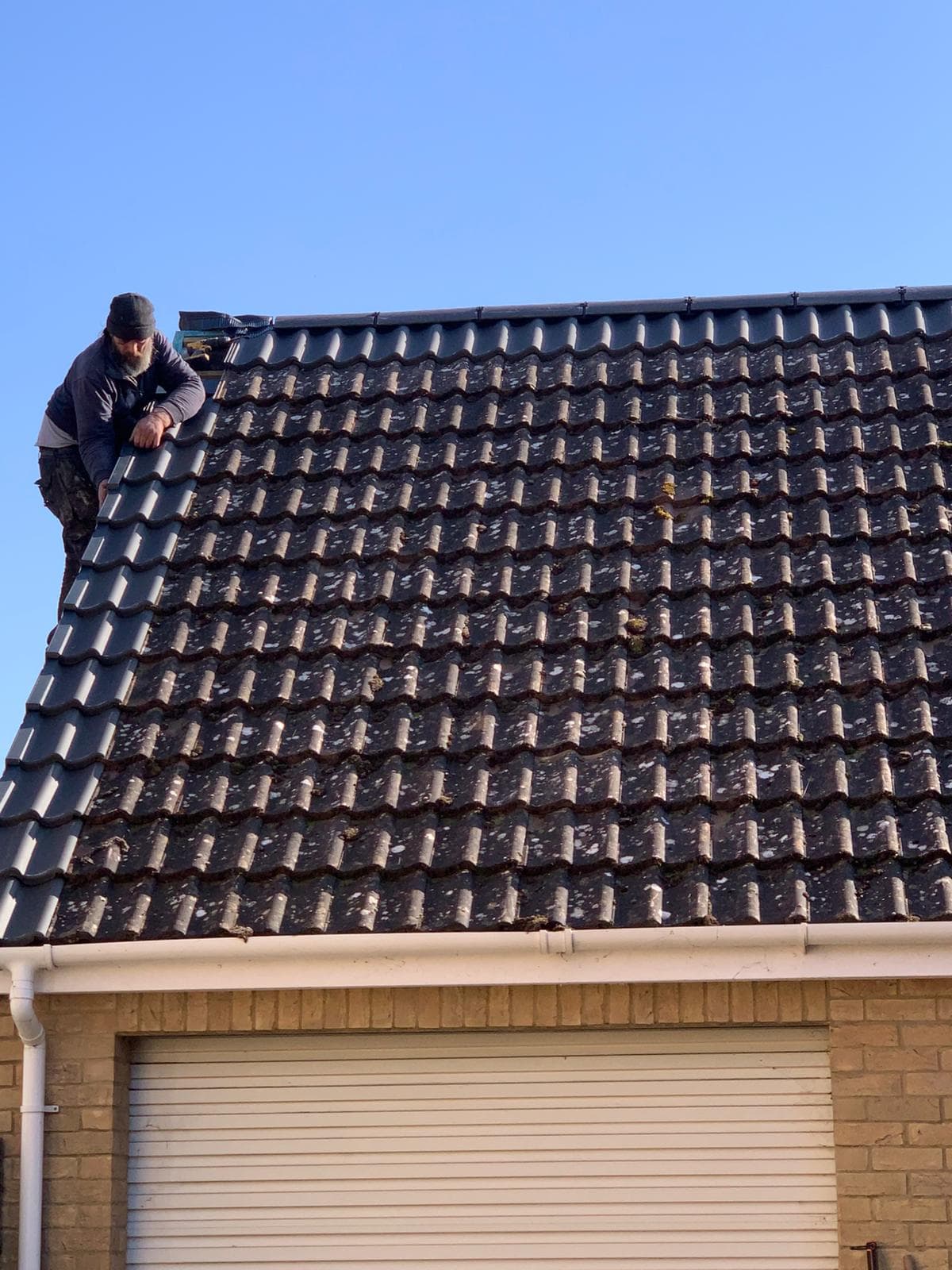
Hip Roof
Slopes on all four sides — more stable in high winds
A hip roof has slopes on all four sides, meeting at a ridge or a point. Because there are no vertical gable ends, it's more stable in strong winds — which is why it's common in exposed or coastal parts of the UK.
Common Damage
1. Tile or Slate Damage
- Cracked, slipped, or missing tiles
- Caused by wind, frost, or ageing
- Can quickly lead to leaks
2. Hip Ridge Issues
- The angled ridges have special tiles
- Mortar can crack or erode over time
- Tiles may become loose or fall off
3. Valley Problems
- Where two roof slopes meet, a valley forms
- Debris buildup blocks water flow
- Valley lining can wear or crack
4. Roof Leaks
- Often start at hip edges, flashing, or ridge line
5. Structural Movement
- Settlement or ageing can cause shifting
6. Timber Rot
- Moisture entering the roof can rot rafters and battens
7. Flashing Failure
- Lead flashing can split or lift
- Common around chimneys and joints
Repairs
minor Repairs
- Replace broken or slipped tiles
- Repoint hip and ridge tiles
- Clear and repair valleys
- Fix flashing
moderate Repairs
- Replace sections of underfelt or battens
- Repair valley linings (lead or fibreglass)
- Fix small structural timber issues
major Repairs
- Replace large sections of tiles
- Repair sagging roof areas
- Replace damaged rafters or trusses
New Installation
When Replacement Is Needed
- Roof is very old (10–15+ years depending on materials)
- Widespread leaks or recurring problems
- Structural damage or sagging
- Major renovation or extension
Installation Steps
Strip the Old Roof
- Remove tiles, battens, and felt
Inspect & Repair Structure
- Check rafters and joists
- Replace any rotten or weak timber
Build the Frame
- Install rafters and hip rafters (diagonal supports)
- Fit ridge board
Add Layers
- Breathable membrane (waterproof layer)
- Battens fixed across rafters
- Insulation (if upgrading energy efficiency)
Install Roof Covering
- Tiles, slate, or other materials
- Special hip tiles fitted along edges
Finish Details
- Ridge and hip systems (modern dry systems often used)
- Flashing installed around chimneys and joints
- Gutters and drainage connected
Lifespan
- Tiles / Slate
- 30–50 years
- Membrane
- 10–20 years
- Structure
- 100 years if kept dry
Warning Signs
- Water leaks or damp patches
- Loose or missing hip tiles
- Sagging or uneven roof lines
- Debris buildup in valleys
- Daylight visible in loft
Other Roofing Services
Half-Hip Roof
A mix of gable and hip — reduced wind load with good loft space
Flat Roof
Common on extensions, garages, and modern builds
Mansard Roof
Steep lower slope with a flatter top — maximises attic space
Gambrel Roof
Two slopes on each side like a barn — rare in the UK but distinctive
Butterfly Roof
Two slopes inward forming a V — modern eco architecture
Saltbox Roof
One long slope, one short — asymmetrical and distinctive
Need Help With Hip Roof?
Get in touch for a free, no-obligation quote. We'll survey the job and talk you through the options.
Get Your Free Quote